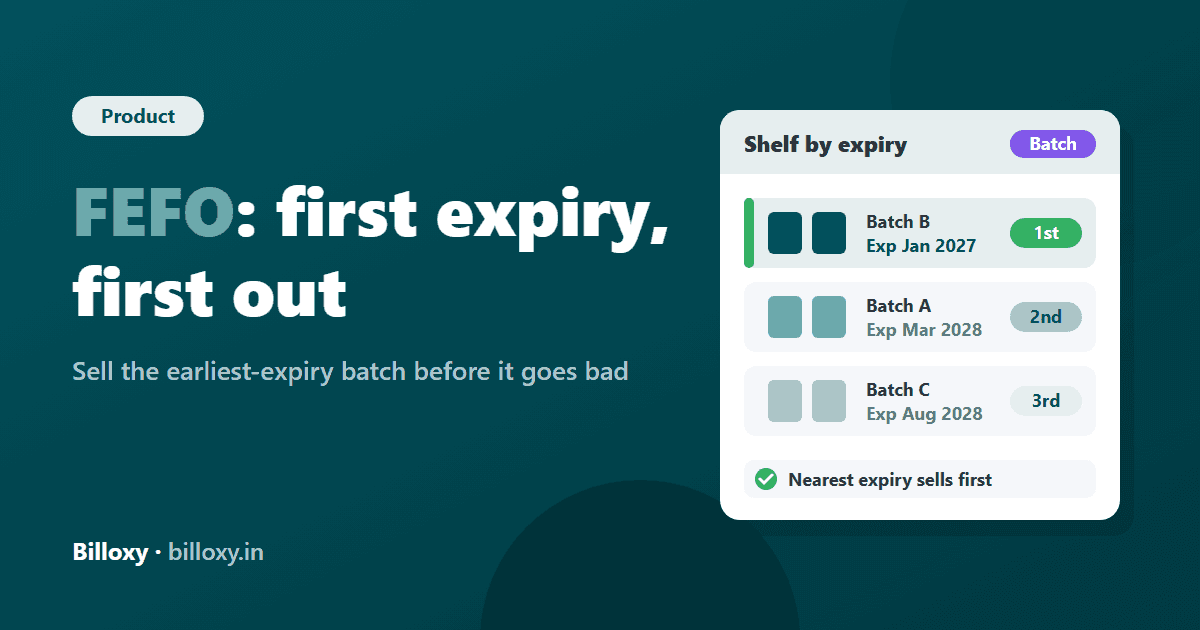
FEFO (First Expiry, First Out): sell the earliest-expiry stock first
FEFO (First Expiry, First Out) explained for Indian shops: FEFO vs FIFO vs LIFO, a worked example, a daily routine, and batch tracking in Billoxy.
Insights on AI-powered invoicing, GST, and modern business workflows.
Explore best practices, how-to guides, and product updates to help you run a smarter, more automated business with Billoxy.

FEFO (First Expiry, First Out) explained for Indian shops: FEFO vs FIFO vs LIFO, a worked example, a daily routine, and batch tracking in Billoxy.

Ledger format with filled samples: T-format, running-balance ledger and party statement of account, plus how to post, balance and confirm party ledgers.

Credit note vs debit note under GST: who issues each, when to use them, rule 53 fields, the 30 November cut-off, the November 2026 discount change, and trade examples.

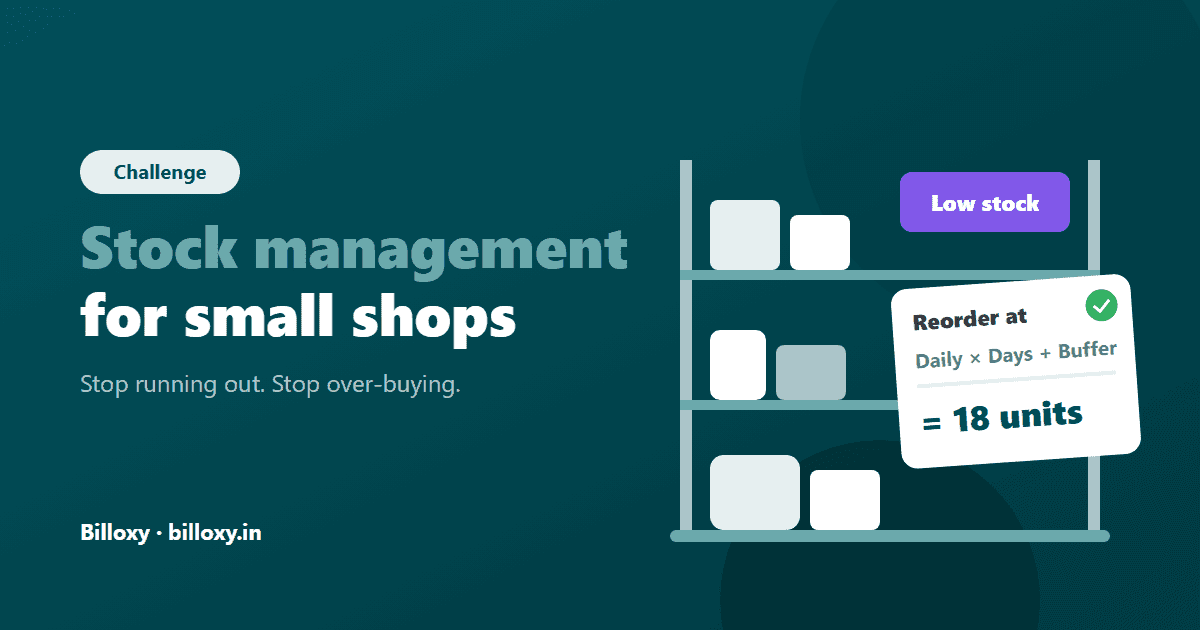
Stock management for small Indian shops: why shops run out and over-buy, the reorder level formula with a rupee example, ABC sorting, notebook vs Excel vs software, and the GST stock record.

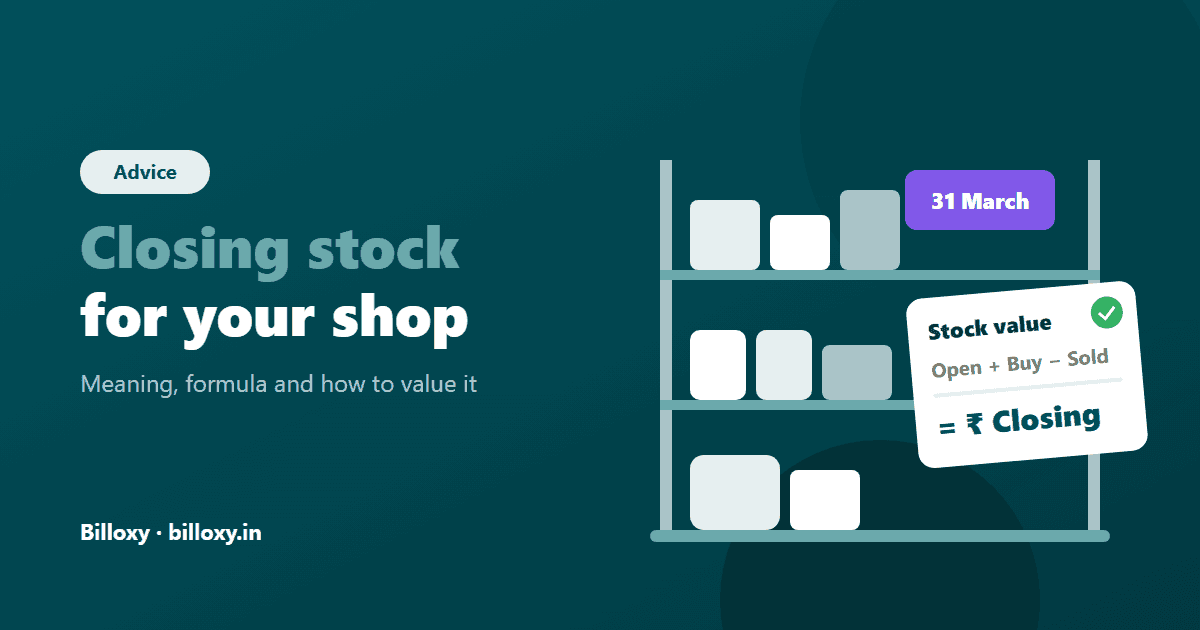
Closing stock explained for small Indian shops: meaning, the formula, two ways to calculate it with rupee examples, valuation at cost or NRV, FIFO vs weighted average, and GST.

How to start a clothing business in India: shop vs boutique vs online, cost heads, shop and GST registration, the GST rate on clothes, buying stock by size and colour, billing and a wedding-season checklist.

How Indian shops handle sales returns and exchanges: counter steps, refund vs exchange vs store credit, credit note fields under rule 53, the section 34 time limit, the journal entry, and an after-Diwali checklist.

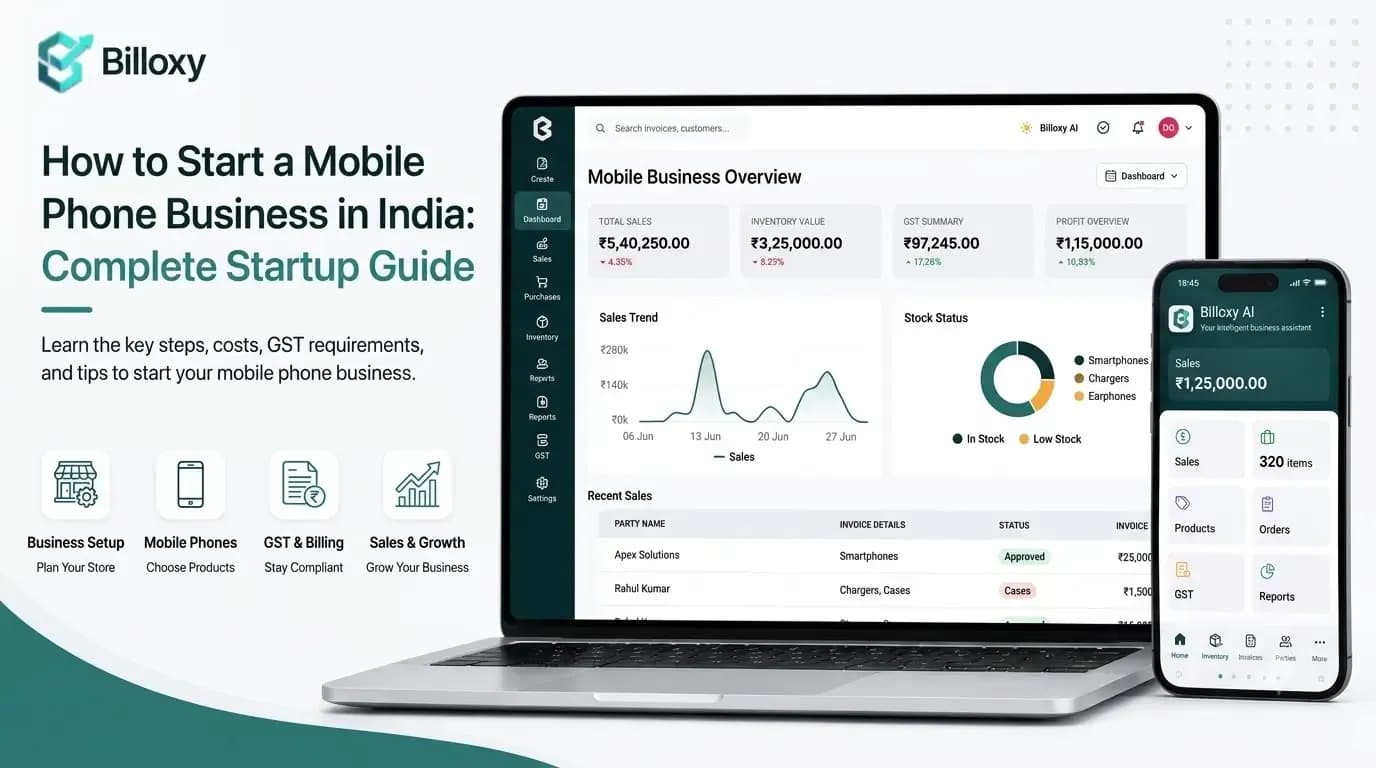
Starting a mobile phone business in India involves several connected decisions, from choosing what to sell to setting up billing and inventory systems. Anyone exploring how to start a mobile shop in India needs to source products, register the mobile shop business correctly and keep transaction records organised from day one.

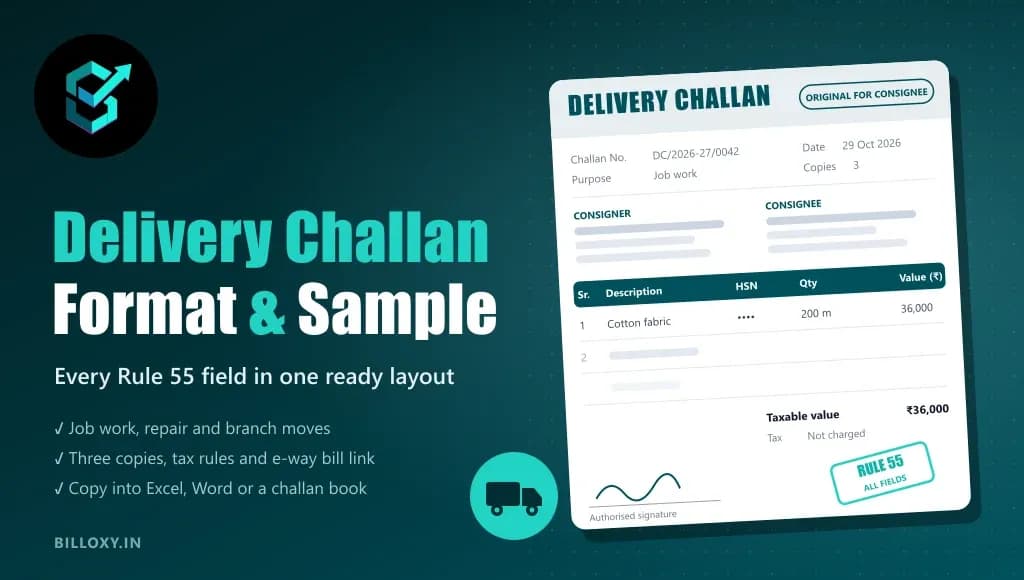
A ready delivery challan format with every Rule 55 field: header, consignee, item table with HSN and tax columns, copies, a job-work example, and how the challan fits with the tax invoice and e-way bill.

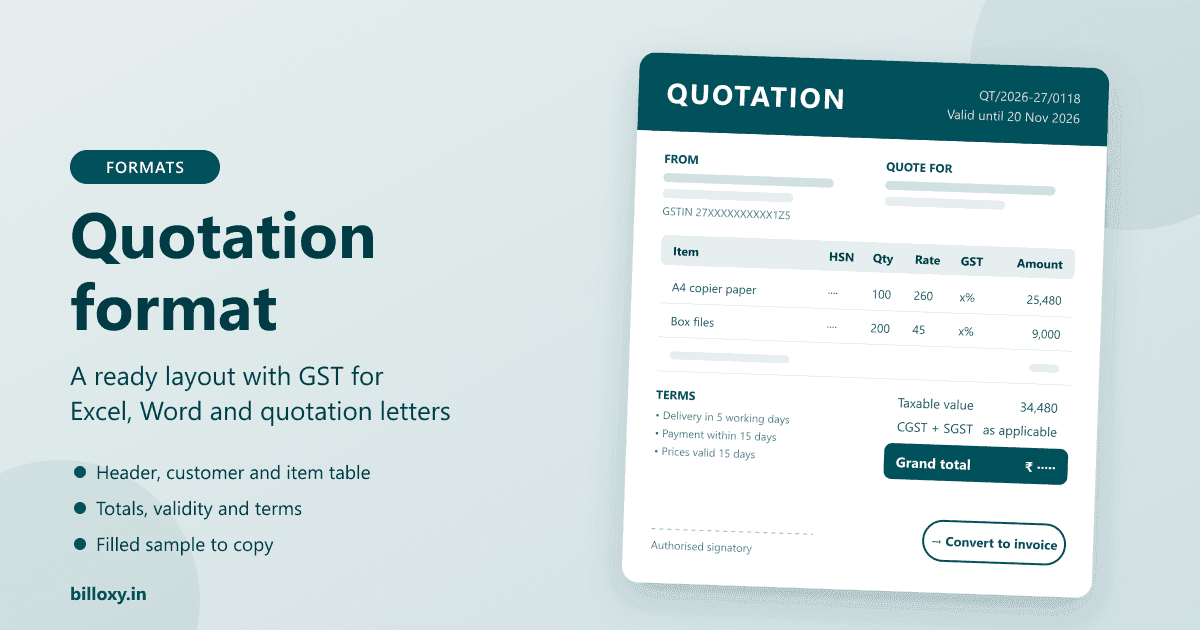
A ready quotation format for Indian businesses: header, customer, item table with HSN and GST, totals, validity and terms, a filled sample, and versions for goods, services and quotation letters.

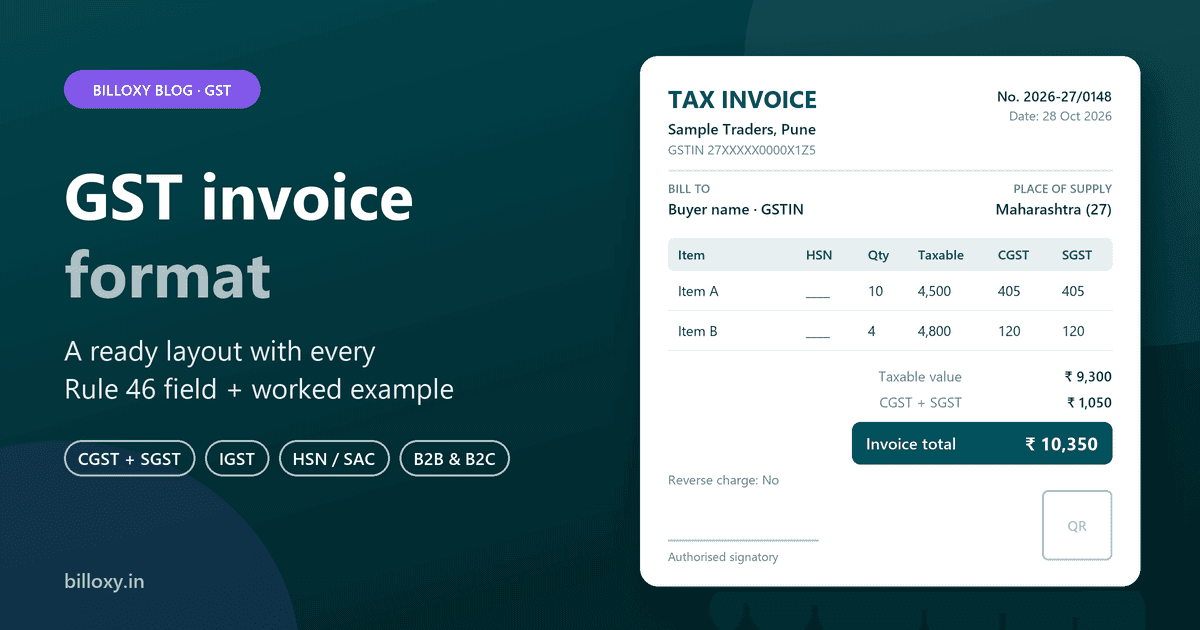
A ready GST invoice format with every Rule 46 field: header, buyer, item table with HSN and CGST/SGST/IGST columns, tax summary, a worked example, B2B vs B2C rules and invoice copies.

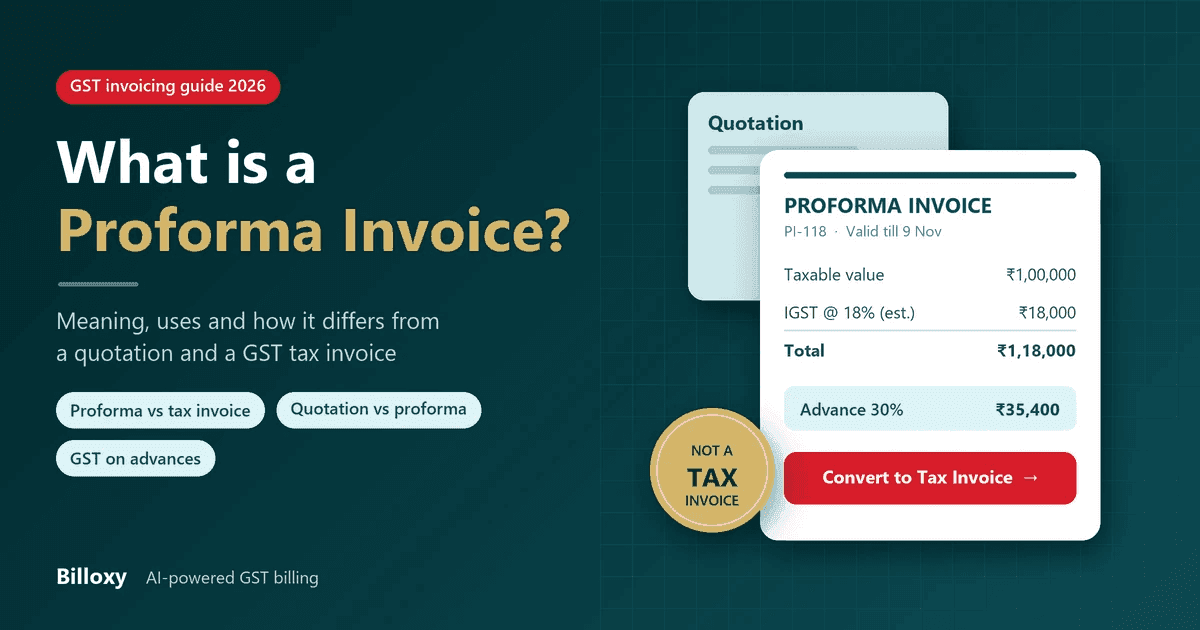
What a proforma invoice is, what to include, how it differs from a quotation and a GST tax invoice, the GST rules on advances, and a worked example for Indian MSMEs.

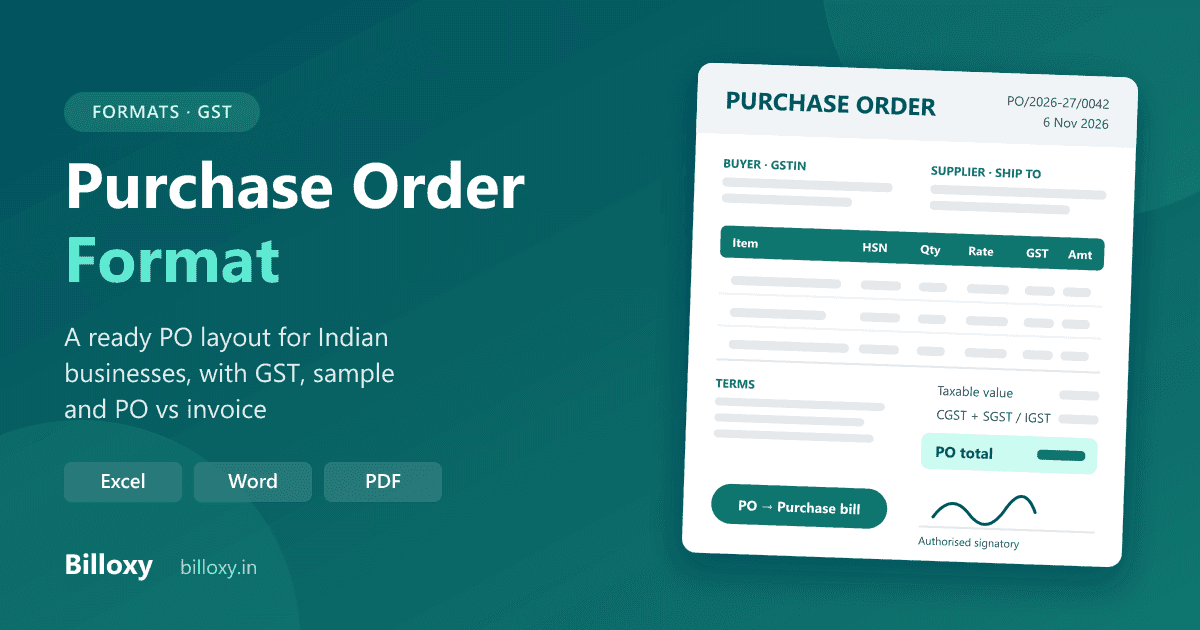
A ready purchase order format for Indian businesses: buyer and supplier details, item table with HSN and GST, totals, delivery and payment terms, a filled sample, and versions for goods, services and repeat orders.

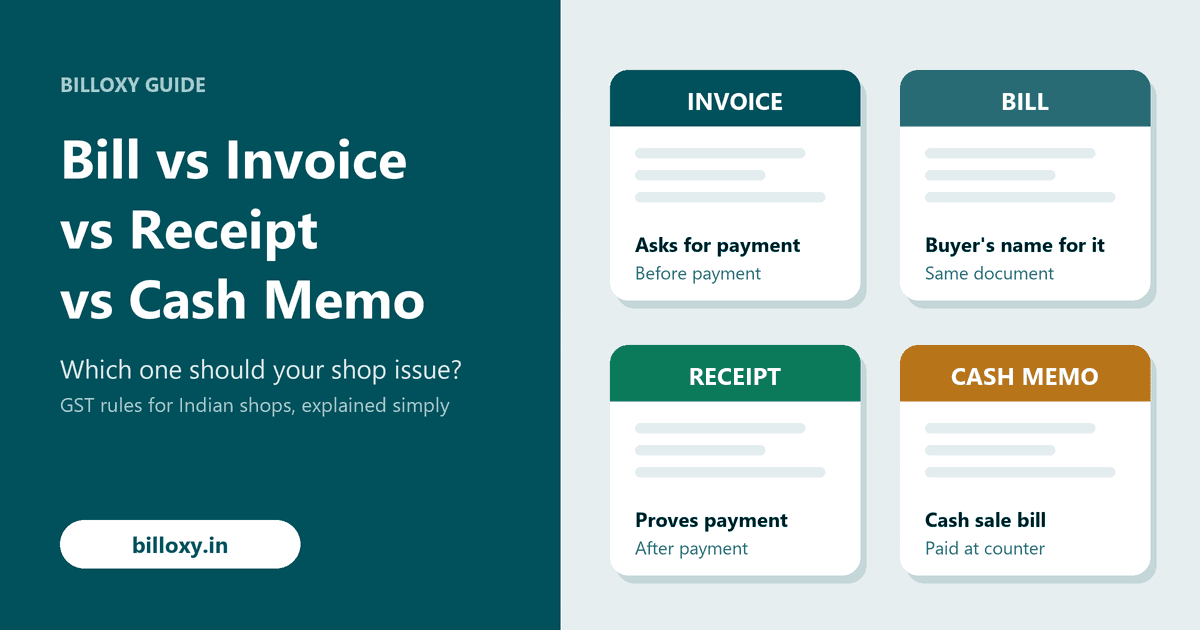
Bill vs invoice vs receipt vs cash memo for Indian shops: what each document proves, when to issue it, and what GST requires from a registered seller.

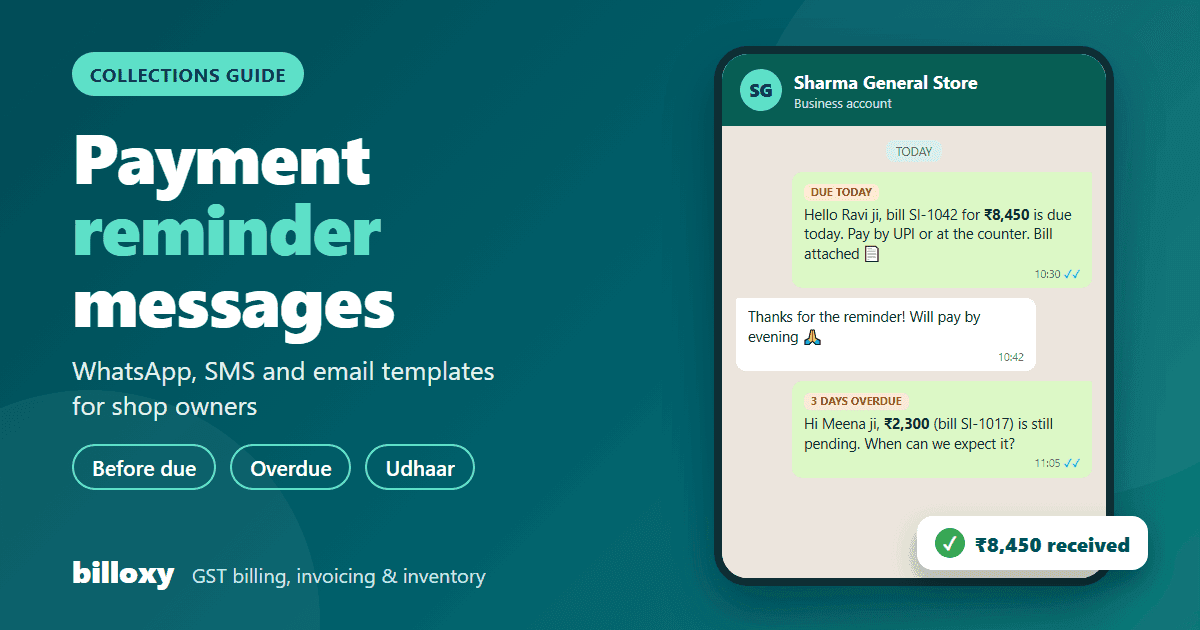
Ready-to-copy payment reminder messages for WhatsApp, SMS and email, a reminder schedule, udhaar balance messages and how to ask for payment politely.

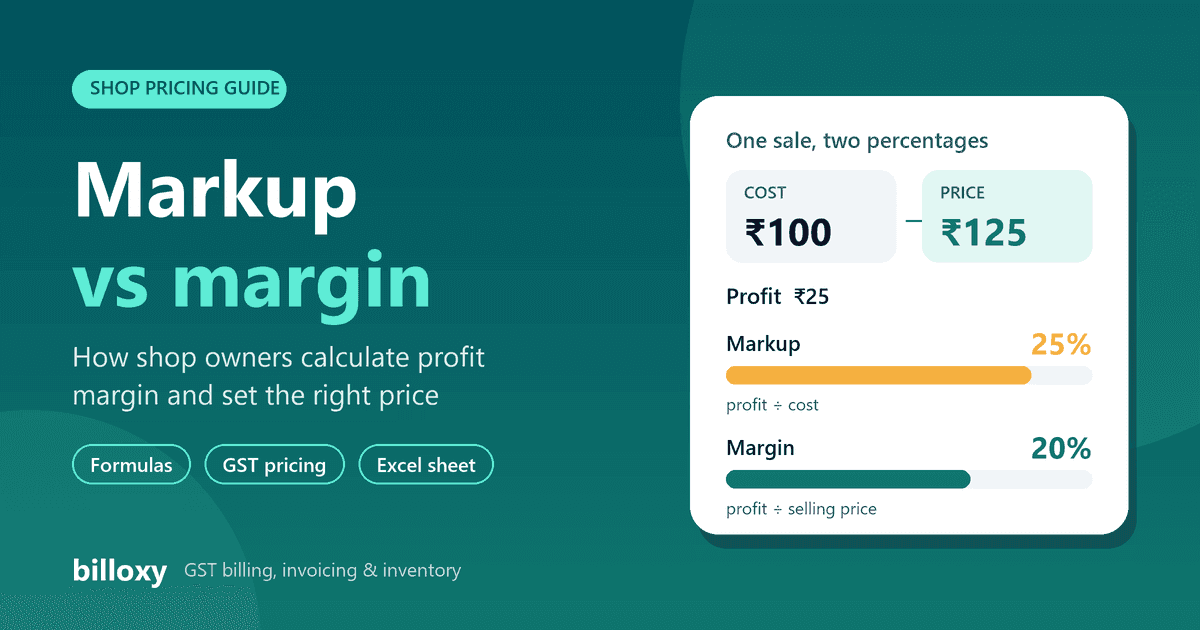
Markup vs margin for Indian shop owners: formulas, a conversion table, how GST fits into the selling price, what a discount does to profit, and a pricing sheet for Excel.

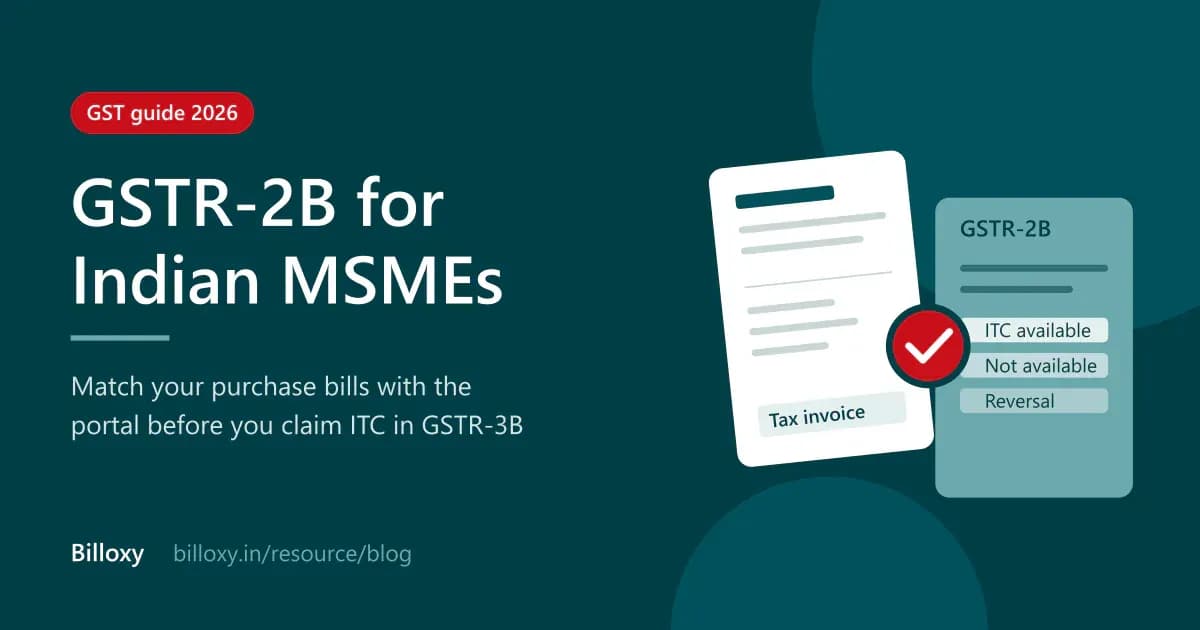
GSTR-2B is the auto-drafted ITC statement on the GST portal. Indian MSMEs use it to check purchase invoices before claiming input tax credit.

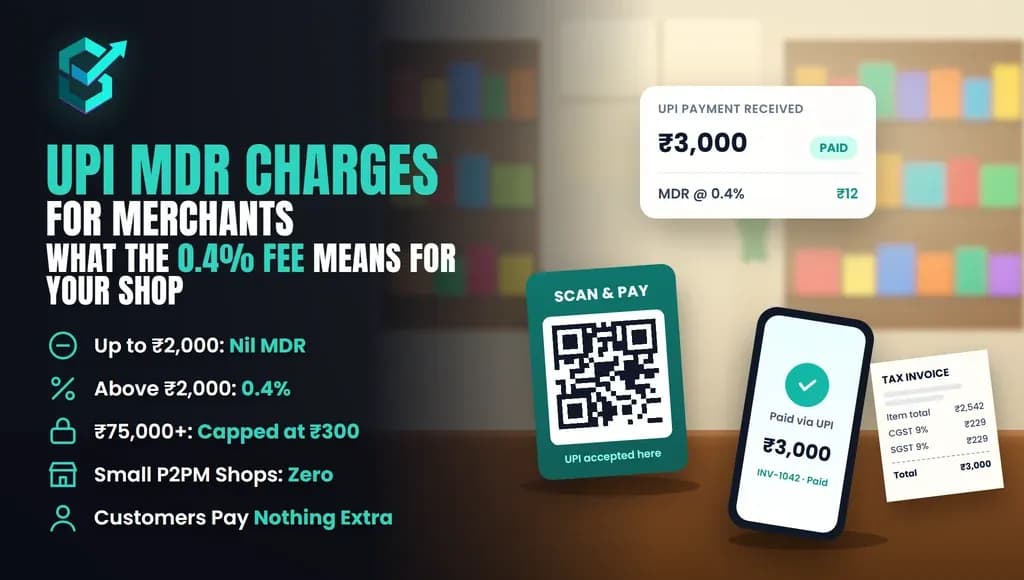
UPI MDR explained for Indian merchants: 0.4% above ₹2,000, ₹300 cap, ₹5 flat categories, zero MDR for P2PM shops, the post-Diwali start and how to record it.

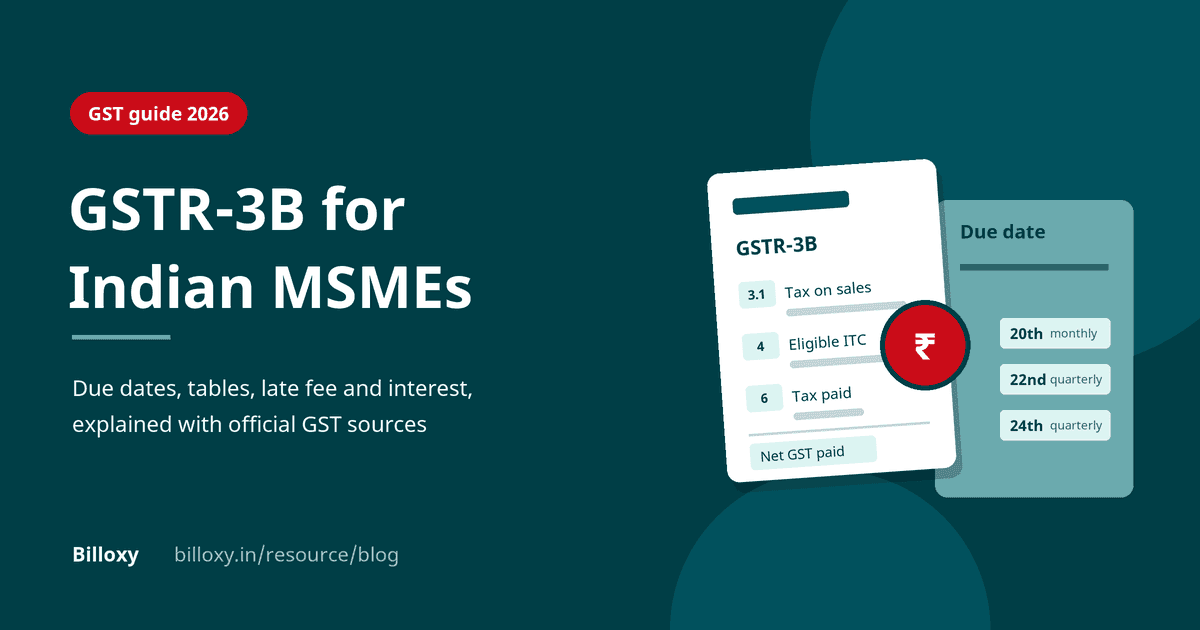
GSTR-3B is the GST return in which you declare sales tax and ITC and pay net GST. See who files, monthly and QRMP due dates, the tables, late fee and interest.

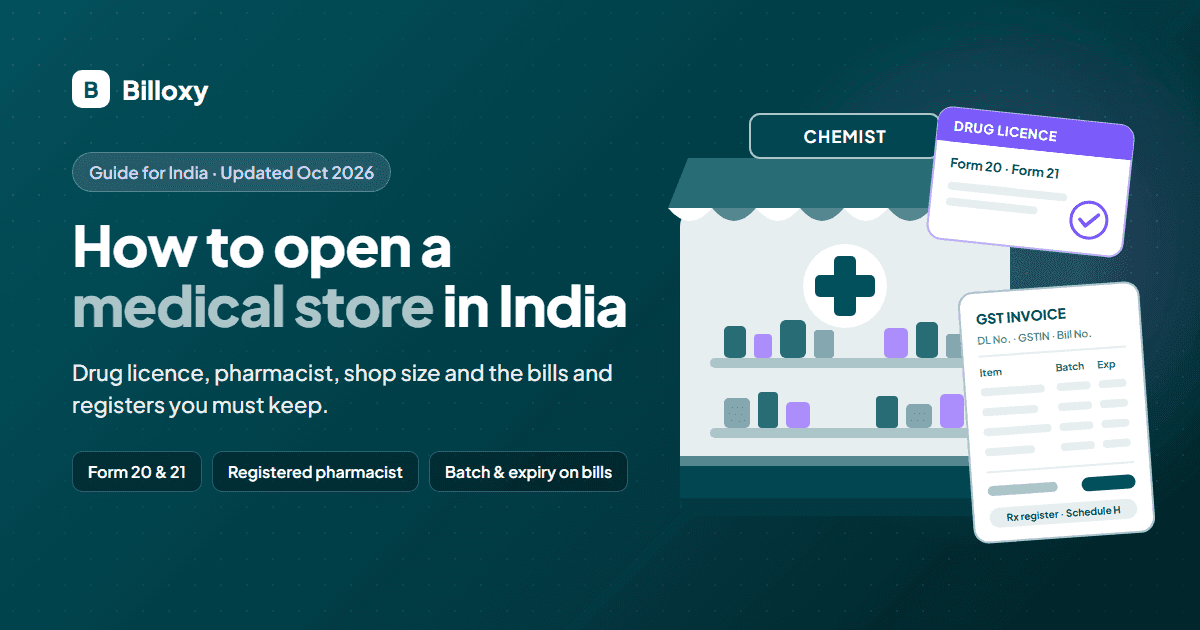
How to open a medical store in India: the drug licences (Form 20, 21, 20B, 21B), pharmacist rule, shop size, application steps, other registrations and the bills and records the Drugs Rules require.

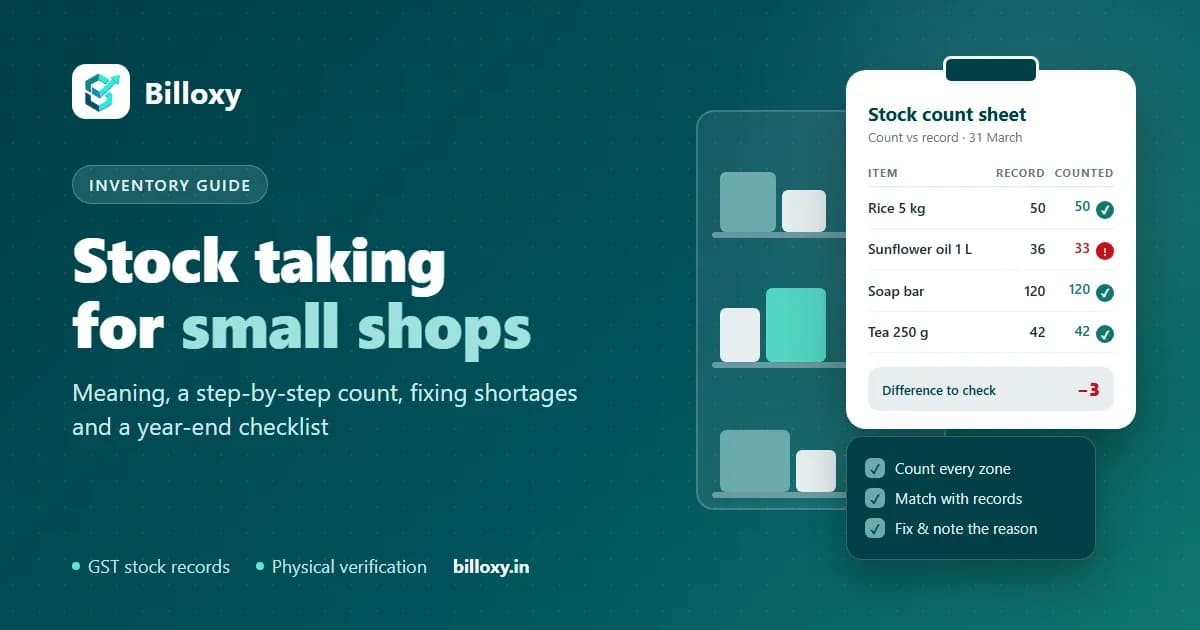
Stock taking explained for small Indian shops: what it means, when to count, a step-by-step method, how to handle shortages, the GST stock-record rules and a year-end checklist.

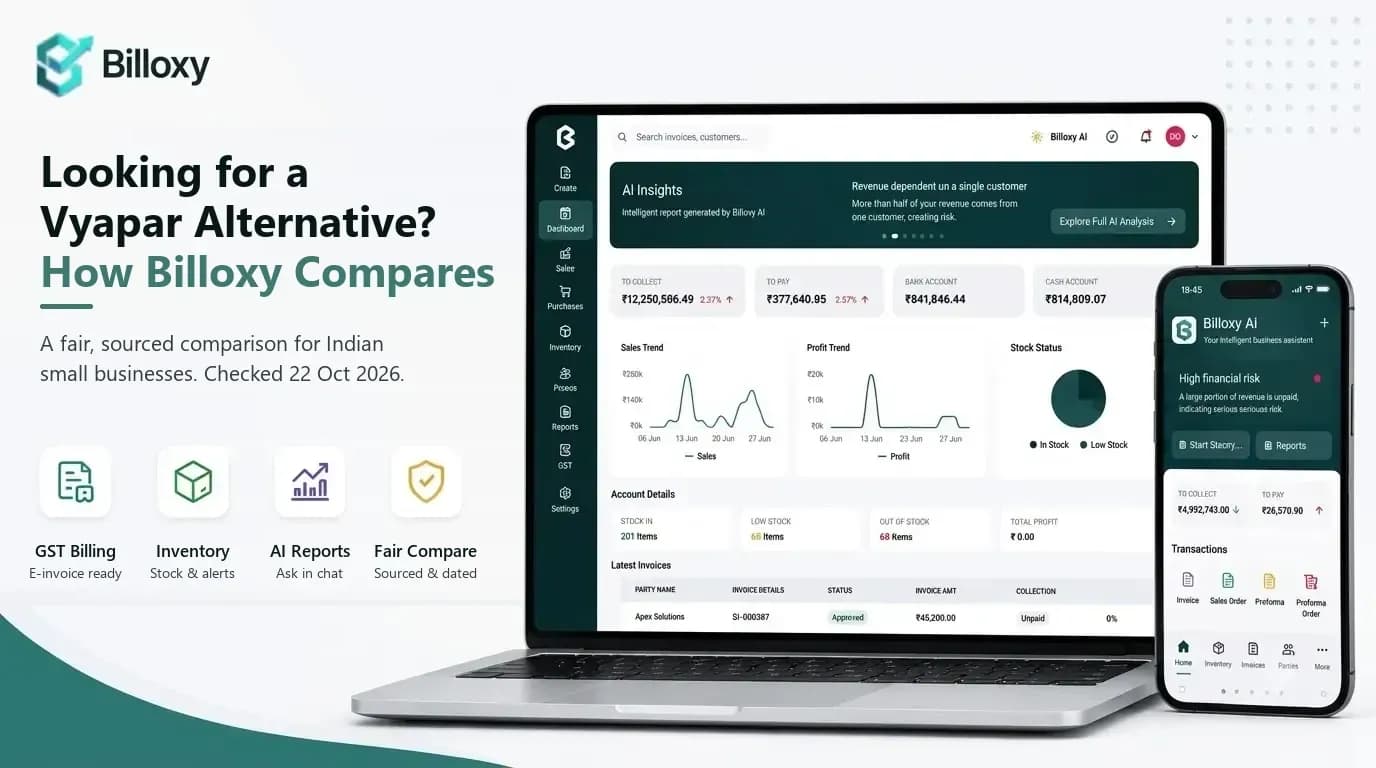
A fair Billoxy vs Vyapar comparison for Indian small businesses: GST invoicing, e-invoice, offline use, Tally, AI help, free plan and trial, with sources dated 22 Oct 2026.

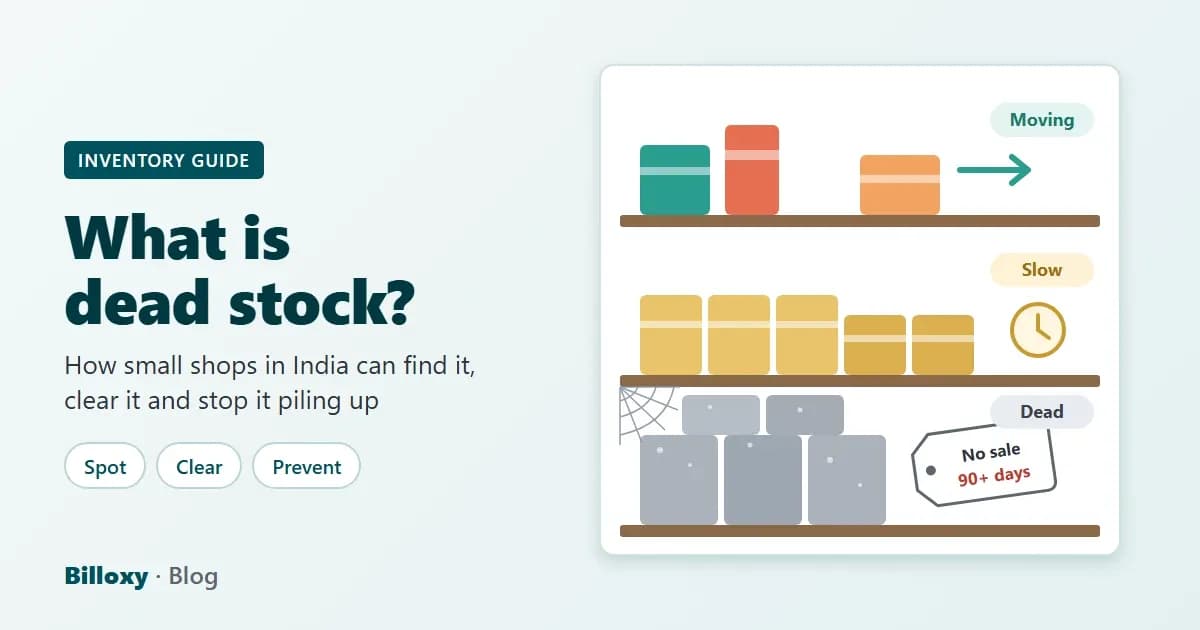
Dead stock explained for small Indian shops: why it builds up, how to find it in your stock records, 7 ways to clear it, the GST rules on discounts and write-offs, and a checklist.

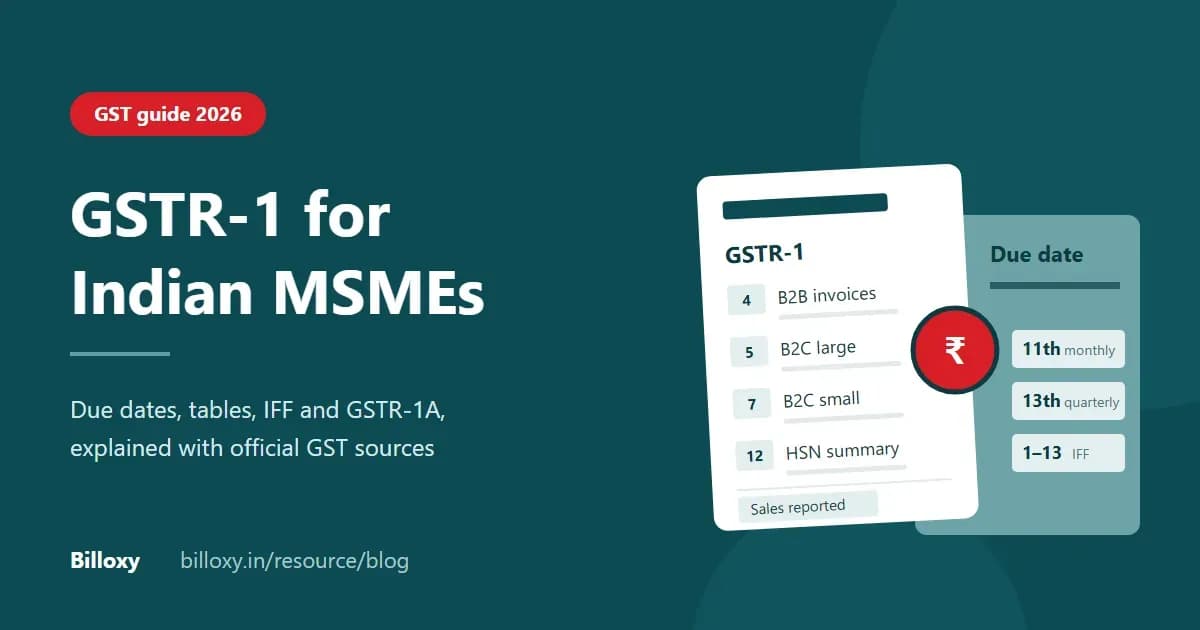
GSTR-1 is the GST statement of your sales invoices and notes. See who files, the 11th/13th due dates, what goes in each table, IFF, GSTR-1A and late fee.

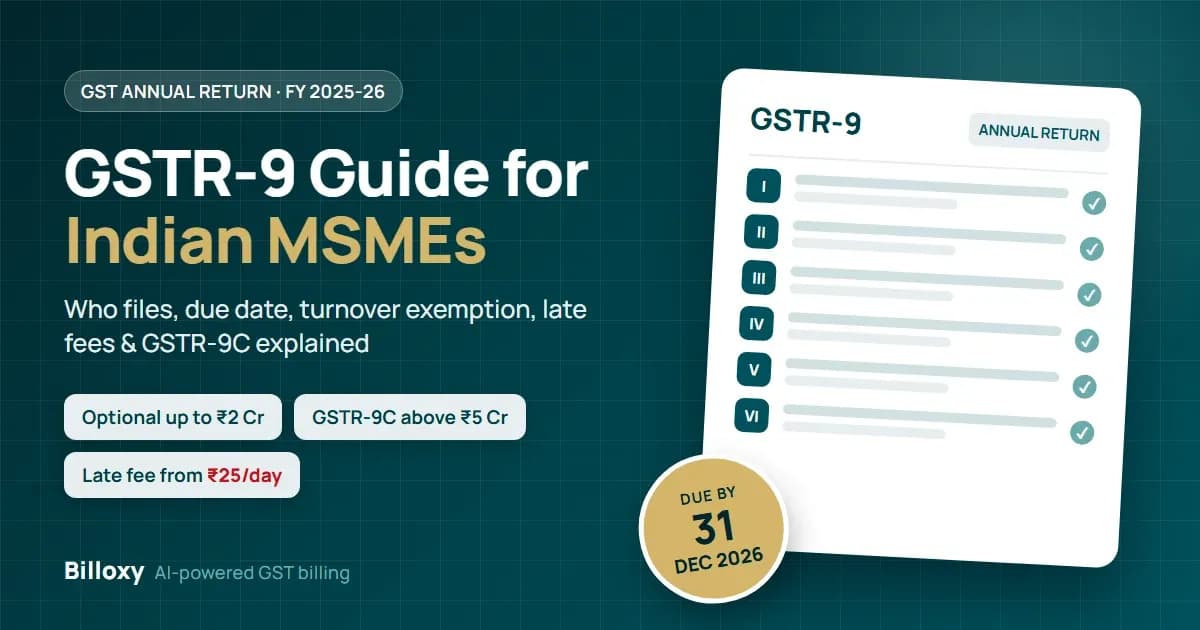
GSTR-9 is the annual GST return for regular taxpayers. See who files, the FY 2025-26 due date, the turnover exemption rule, late fees and GSTR-9C.

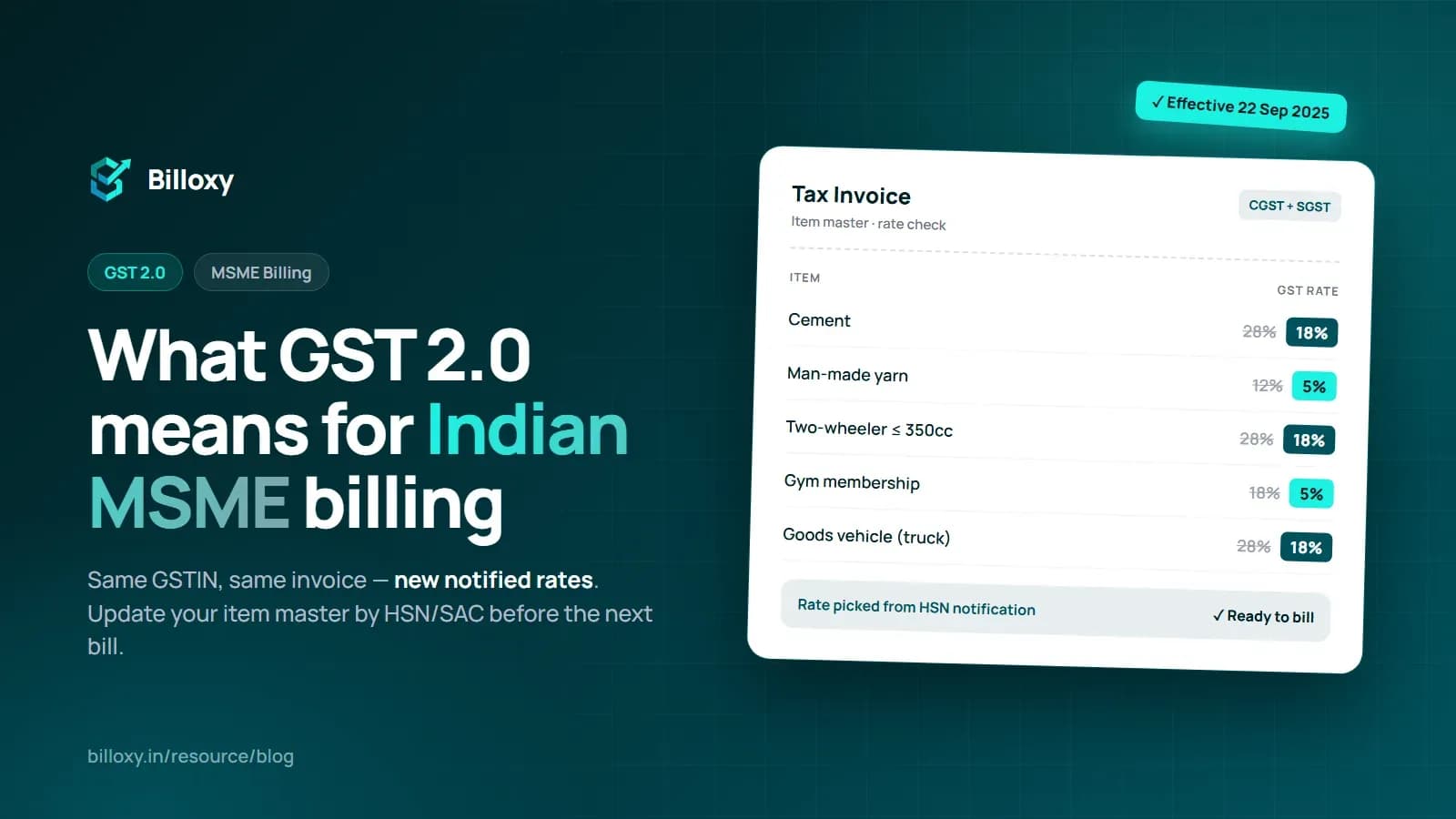
GST 2.0 is the September 2025 GST rate reform. It took effect on 22 September 2025. Shops still issue a GST invoice — they must bill the notified rate for each item.

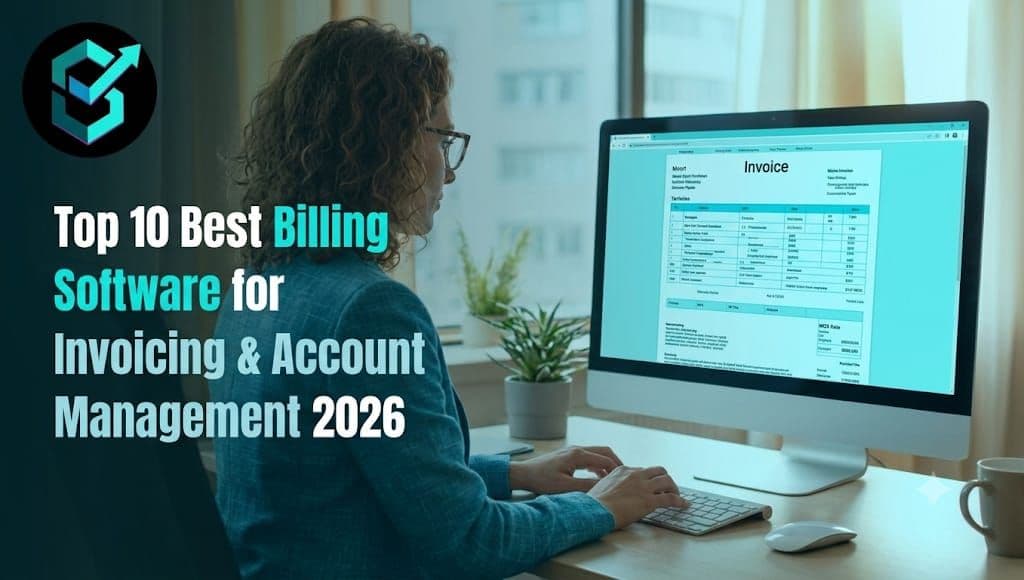
A practical 2026 comparison of 10 billing and accounting apps for Indian MSMEs — including where each one fits best.

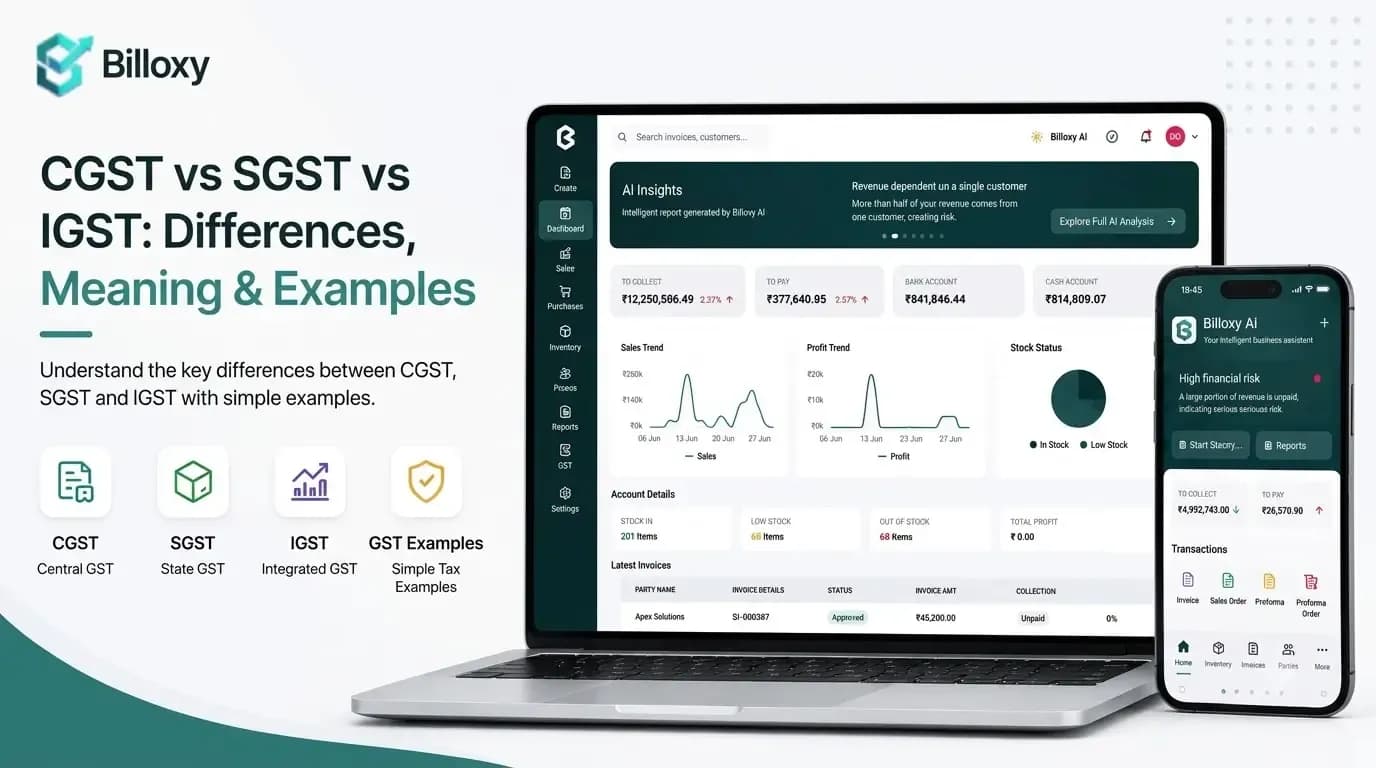
Many businesses face the same confusion when creating GST invoices: should CGST and SGST be charged, or does IGST apply instead. The CGST SGST IGST difference comes down primarily to whether the supply is intra-State or inter-State. This guide explains CGST vs SGST vs IGST clearly, with simple examples showing how each tax appears on an invoice.

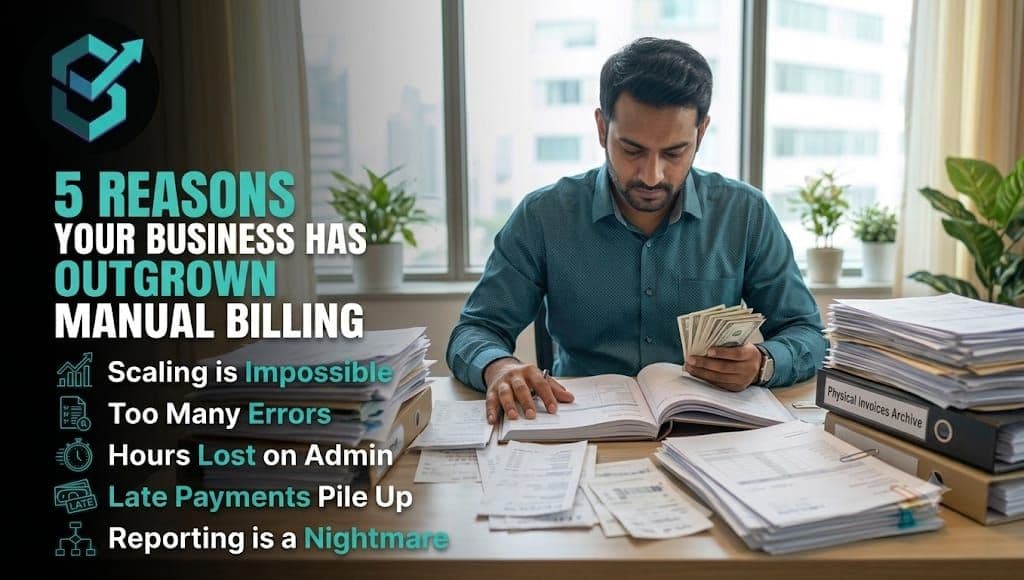
Five clear signs your small business has outgrown notebooks and spreadsheets — and when it is time to switch to digital billing.

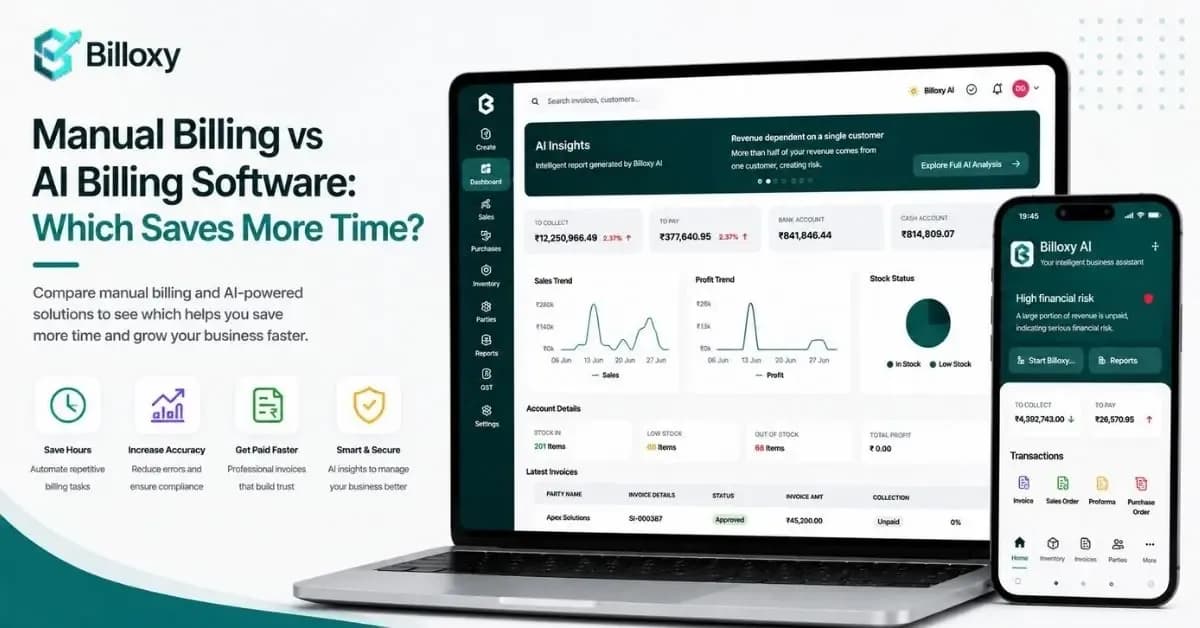
Discover how AI billing software compares to manual billing in terms of speed, accuracy, automation, and overall efficiency for businesses.

Learn how small businesses and MSMEs can create professional GST invoices, stay compliant, reduce errors, and simplify billing with GST software.

Learn how faster billing improves cash flow for MSMEs and small businesses by reducing payment delays, improving efficiency, and accelerating collections.

Learn how AI-powered billing systems like Billoxy automate repetitive tasks and reduce human error in your invoicing pipeline.

Understand e-invoicing for Indian MSMEs, including eligibility, GST compliance, benefits, and how digital invoicing improves business efficiency.

Discover the most common invoice mistakes that slow down payments and learn practical tips to invoice correctly for faster customer payments.
Support